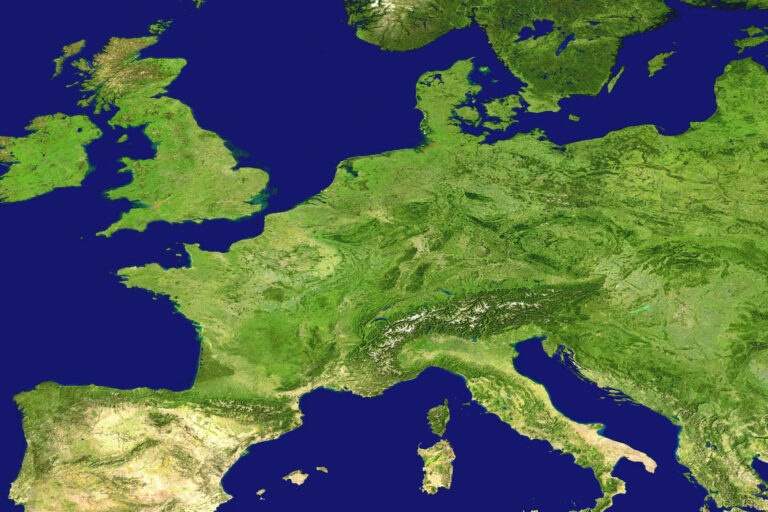

Marketing research is the compass that guides business decisions, especially in competitive environments like the European market.
By understanding customer needs, market trends, and the competitive landscape, organisations can craft strategies that resonate. In this post, we’ll explore the four fundamental types of marketing research, with practical examples and tips on how to apply them using European market research services.
Introduction: Why marketing research matters in Europe
The European market is diverse, regulated, and dynamic. Companies seeking to expand or optimise their regional strategies need reliable insights drawn from rigorous research. The four main types of marketing research, exploratory, descriptive, casual (causal), and analytical, cover the spectrum from initial discovery to causal understanding and predictive analysis. Using these types in combination, and sourcing high-quality european market research services, can help you reduce risk and identify new opportunities.
1. Exploratory research: Opening the door to insights
Exploratory research is the initial step when you’re unclear about the problem or when the topic is new to your organisation. It’s flexible, qualitative, and designed to generate ideas, hypotheses, and a deeper understanding of consumer motivations.
- Objectives and methods
- Clarify the problem or decision you face.
- Gather qualitative data through interviews, focus groups, ethnography, and open-ended surveys.
- Identify key variables, audience segments, and potential barriers.
- When to use exploratory research
- Entering a new European market or launching a new product category.
- Testing a concept before developing a full research plan.
- Unpacking customer pain points and emotional drivers.
- Practical tips
- Start with a small, diverse sample to capture a range of perspectives.
- Analyse themes rather than counting repetitions; look for patterns and surprising insights.
- Use exploratory findings to shape descriptive or casual research questions.
In the context of european market research services, exploratory studies can help you tailor subsequent research to regional nuances, languages, and regulatory considerations.
2. Descriptive research: Mapping the landscape
Descriptive research aims to describe the market, customers, and the competitive environment in a structured way. It answers questions like who, what, where, when, and how much, providing a clear snapshot of the current state.
- Objectives and methods
- Quantify market size, customer demographics, purchasing behaviour, and brand awareness.
- Use surveys, observation, and secondary data analysis to build profiles and benchmarks.
- Segment markets by variables such as age, income, region, or channel preference.
- When to use descriptive research
- Measuring market potential across different European regions.
- Tracking changes over time to monitor performance against competitors.
- Establishing baselines before testing new messaging or pricing strategies.
- Practical tips
- Ensure samples are representative of the European audience you’re targeting.
- Combine primary data with reliable secondary sources to strengthen context.
- Present findings with clear dashboards and actionable metrics.
Descriptive research lays the groundwork for targeted strategy, allowing organisations to allocate resources efficiently and measure progress across markets in Europe.
3. Causal (causal) research: Testing cause-and-effect
Causal research, often conducted through experiments or quasi-experiments, seeks to determine cause-and-effect relationships. This type is essential when you want to understand whether a specific variable directly influences an outcome.
- Objectives and methods
- Test hypotheses about how changes in price, packaging, promotions, or messaging affect behaviour.
- Use experiments such as A/B tests, field trials, or controlled lab studies.
- Control for confounding variables to establish clear attribution.
- When to use causal research
- Evaluating the impact of a Europe-wide pricing strategy or promotional campaign.
- Determining which feature or benefit drives conversion in a digital funnel.
- Verifying the effectiveness of channel strategies (online vs. offline) across markets.
- Practical tips
- Design experiments with randomisation and sufficient sample sizes.
- Run tests across representative subsets of markets to capture regional differences.
- Interpret results in the context of cultural and regulatory variations across Europe.
Causal research helps you make evidence-based decisions, reducing risk when implementing changes that could affect multiple countries or languages.
4. Analytical research: Turning data into intelligence
Analytical research focuses on interpreting data, modelling relationships, and forecasting outcomes. It blends statistical techniques with domain knowledge to generate actionable insights and predictions.
- Objectives and methods
- Build models to understand drivers of demand, churn, or lifetime value.
- Use regression, segmentation analysis, conjoint analysis, and predictive modelling.
- Combine internal data with external datasets (economic indicators, demographic trends, market signals).
- When to use analytical research
- Forecasting demand for a new product line in diverse European markets.
- Optimising marketing mix and allocation across channels and regions.
- Personalising customer journeys based on behavioural data and preferences.
- Practical tips
- Start with clean data and establish governance to ensure quality.
- Validate models with out-of-sample testing and backtesting against real-world results.
- Communicate insights through scenario planning and clear recommendations.
Analytical research transforms raw data into strategic intelligence, enabling smarter investment and more precise targeting within the European market.
How to choose the right mix of research types
- Start with your objective: discovery (exploratory) vs. description (descriptive) vs. explanation (causal) vs. prediction (analytical).
- Consider resource constraints: budget, time, and access to regional data.
- Leverage European market research services that specialise in cross-border insights, language localisation, and regulatory compliance.
- Use a mixed-methods approach: begin with exploratory work to shape hypotheses, follow with descriptive and causal studies to test them, and finish with analytical modelling to forecast outcomes.
Final thoughts
Understanding the four core types of marketing research, exploratory, descriptive, causal, and analytical, gives you a comprehensive toolkit to navigate the complexities of the European market. Each type serves a distinct purpose, and when combined strategically, they reduce risk, clarify opportunities, and guide evidence-based decisions.
Whether you’re expanding into new European regions, refining a localised marketing campaign, or seeking a data-driven edge, leveraging professional European market research services can unlock deeper insights and stronger outcomes.
Remember, great marketing research is not just data collection; it’s a disciplined journey from curiosity to clarity to competitive advantage.