
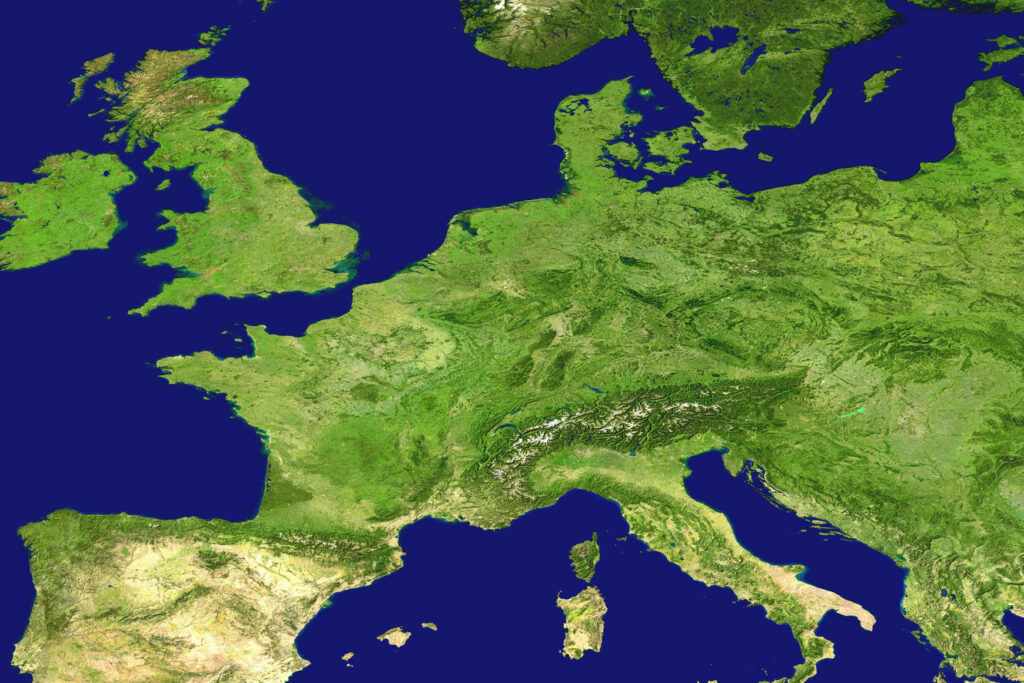
Europe is home to a rich tapestry of research institutions that push the boundaries of knowledge across disciplines.
From cutting-edge scientific labs to influential social science think tanks, the continent hosts a diverse ecosystem of organisations that contribute to the European market and beyond. In this post, we’ll explore what makes a research institute stand out and highlight some of the best-known European players in the research landscape. We’ll also touch on how organisations can leverage european market research services to translate insights into impact.
Understanding what makes a top research institute
Before naming particular institutions, it’s helpful to define what “best” means in this context. Key factors often include:
- Research excellence and impact: High-quality outputs, significant citations, groundbreaking discoveries, or influential policy contributions.
- Interdisciplinary collaboration: Ability to connect fields such as life sciences, engineering, humanities, and social sciences.
- Funding stability and resources: Access to robust funding streams, state-of-the-art facilities, and talented researchers.
- Global reach and partnerships: Active international collaborations, exchange programs, and participation in large-scale projects.
- Relevance to the European market: Producing research that informs industry, policy, and consumer trends, and offering services that support market needs.
With these criteria in mind, here are some of the standout research institutes across Europe, spanning both universities with world-class research outputs and dedicated national or independent institutes.
National and international research powerhouses
- Max Planck Society (Germany) The Max Planck institutes are renowned for fundamental research across physics, biology, chemistry, and the humanities. Their interdisciplinary approach and strong track record of scientific breakthroughs have a lasting impact on global science, technology, and industry.
- European Organization for Nuclear Research (CERN) (Switzerland/France) CERN stands at the forefront of particle physics. It’s a beacon of international collaboration, contributing not only to advances in basic science but also to technologies that filter into the European market through spin-offs and research tools.
- École Polytechnique Fédérale de Lausanne (EPFL) and the Swiss Federal Institutes of Technology (ETH Zurich) network (Switzerland) These institutions are powerhouses in engineering, computer science, and life sciences, known for innovation, industry partnerships, and strong startup ecosystems.
- Wellcome Trust Sanger Institute (United Kingdom) A leader in genomics and computational biology, the Sanger Institute’s work informs medicine, agriculture, and biotechnology, influencing both policy and industry practice.
- European Molecular Biology Laboratory (EMBL) (Multiple locations in Europe) EMBL conducts high-impact research in molecular biology while fostering collaboration through training, services, and infrastructure used by researchers across Europe.
- Francis Crick Institute (United Kingdom) A major biomedical research center that brings together scientists from multiple disciplines to tackle complex diseases with translational potential.
- Centre national de la recherche scientifique (CNRS) (France) CNRS is one of Europe’s largest fundamental research organisations, covering a broad spectrum of disciplines and enabling extensive national and international collaboration.
- RIKEN institutes (Note: RIKEN is Japanese; included as a comparison) While not European, RIKEN’s model often informs European research thinking. European researchers frequently collaborate with such international neighbours on large-scale projects.
- Karolinska Institute (Sweden) and Karolinska University Hospital network (Sweden) Known for medical research with significant global impact, particularly in the fields of neuroscience, oncology, and public health.
- Max Delbrück Center for Molecular Medicine (Germany) Focused on linking basic science with translational medicine, facilitating industry partnerships and clinical applications.
- Institut Pasteur (France) A historic hub for microbiology and infectious disease research, with global collaborations that extend into public health and industry partnerships.
- Technical University of Denmark (DTU) and Danish National Research Foundation network (Denmark) A leader in engineering, energy, and life sciences, known for close ties to industry and practical innovation.
- Imperial College London and University College London (UCL) (United Kingdom) Both universities are powerhouse institutions with deep research portfolios across engineering, medicine, life sciences, and data science.
Research institutes with a strong emphasis on European market relevance
- Fraunhofer Society (Germany) Fraunhofer institutes are renowned for applied research that directly supports industry. Their work spans engineering, materials science, information technology, and health tech, often under contracts with European market players.
- Instituto de Salud Carlos III (Spain) A national public health research institute that contributes to epidemiology, biomedical research, and policy-relevant studies, supporting Europe-wide health initiatives.
- Danish National Research Foundation (Denmark) Funds ambitious research centers that tackle grand challenges with real-world applications, frequently collaborating with industry partners.
- Sweden’s Vinnova-supported research ecosystems While Vinnova is a funding agency, the resulting networks and centers across Sweden exemplify how public funding stimulates productive collaborations with european market research services and industry.
- European Institute of Innovation and Technology (EIT) Knowledge and Innovation Communities (KICs) EIT integrates education, entrepreneurship, and research to drive innovation that meets market needs across Europe, including sectors like climate, health, and digital technology.
The role of european market research services in translating research
A top research institute is only part of the equation. To make a measurable impact on the European market, research outputs must be translated into practical insights, products, and policies. This is where european market research services come into play:
- Market intelligence and trend analysis: Helping researchers understand demand, competition, and regulatory landscapes across EU member states.
- User-centered and policy-oriented research design: Ensuring studies address real-world needs of businesses and public bodies.
- Commercialisation and industry partnerships: Facilitating spin-outs, licensing, and co-development projects that bring discoveries to market.
- Data governance and ethics consulting: Navigating GDPR, data protection, and responsible research practices across borders.
Collaborations and funding landscape
Europe’s research environment thrives on collaboration. Projects funded by the European Commission, national governments, and private partners create a networked ecosystem. Framework programs such as Horizon Europe provide funding for collaborative research across disciplines and borders. Institutes that succeed within this landscape typically maintain strong partnerships with industry, government agencies, and other academic institutions.
Final thoughts
The best research institutes in Europe are not just those with the most accolades, but those that consistently translate curiosity into impact. They combine scientific excellence with strong industry ties, responsible governance, and a clear eye on societal needs.
When organisations seek to understand and navigate the European market, engaging with european market research services can turn academic insights into strategic advantage. Europe’s research ecosystem is vast and vibrant, offering countless opportunities for collaboration, innovation, and discovery.